
ICSE & ISC Science Lab Manuals
Carefully designed practical companions developed in strict accordance with the latest CISCE Syllabus, NEP 2020, and NCF. Comprising 12 comprehensive titles (6 for ICSE Classes 9–10 and 6 for ISC Classes 11–12) across Physics, Chemistry, and Biology — inspiring scientific inquiry through hands-on experiments, systematic procedures, error analysis, and examination readiness.
ICSE Lab Manuals (Classes 9 & 10)
ICSE Lab Manuals are carefully designed practical companions developed in accordance with the latest ICSE Syllabus for Classes 9–10. The series comprises 6 books — 2 each for Physics, Chemistry, and Biology.
It encourages scientific inquiry through hands-on experiments, activities, specimen studies, and project work, helping students strengthen their conceptual understanding. Each practical includes clear objectives, theoretical background, materials required, systematic procedures, observation tables, results, and precautions, enabling students to perform experiments with confidence and accuracy. The manual promotes observation, analysis, critical thinking, and laboratory skills while connecting classroom learning with real-life applications. It serves as an ideal companion for practical work, project assessments, viva voce, and examination preparation.
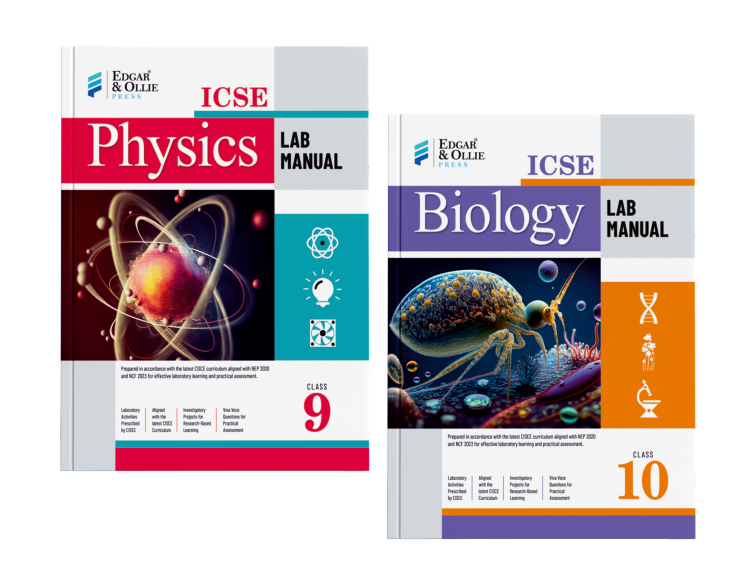
ICSE Lab Manual Series • Physics, Chemistry & Biology (Classes 9–10)
ICSE Laboratory Manuals (Classes 9 & 10)
Complete individual textbooks for Physics, Chemistry, and Biology authored strictly for the latest CISCE curriculum.
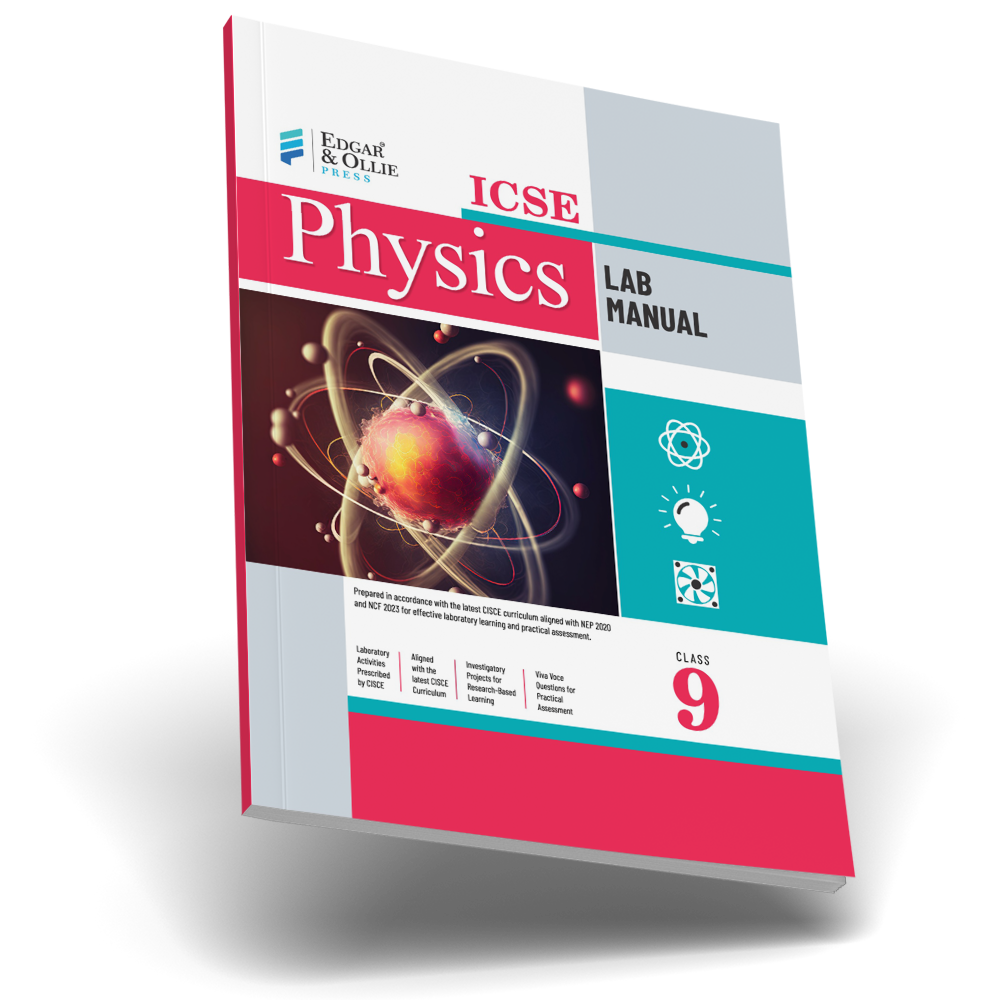
ICSE Physics
Lab Manual
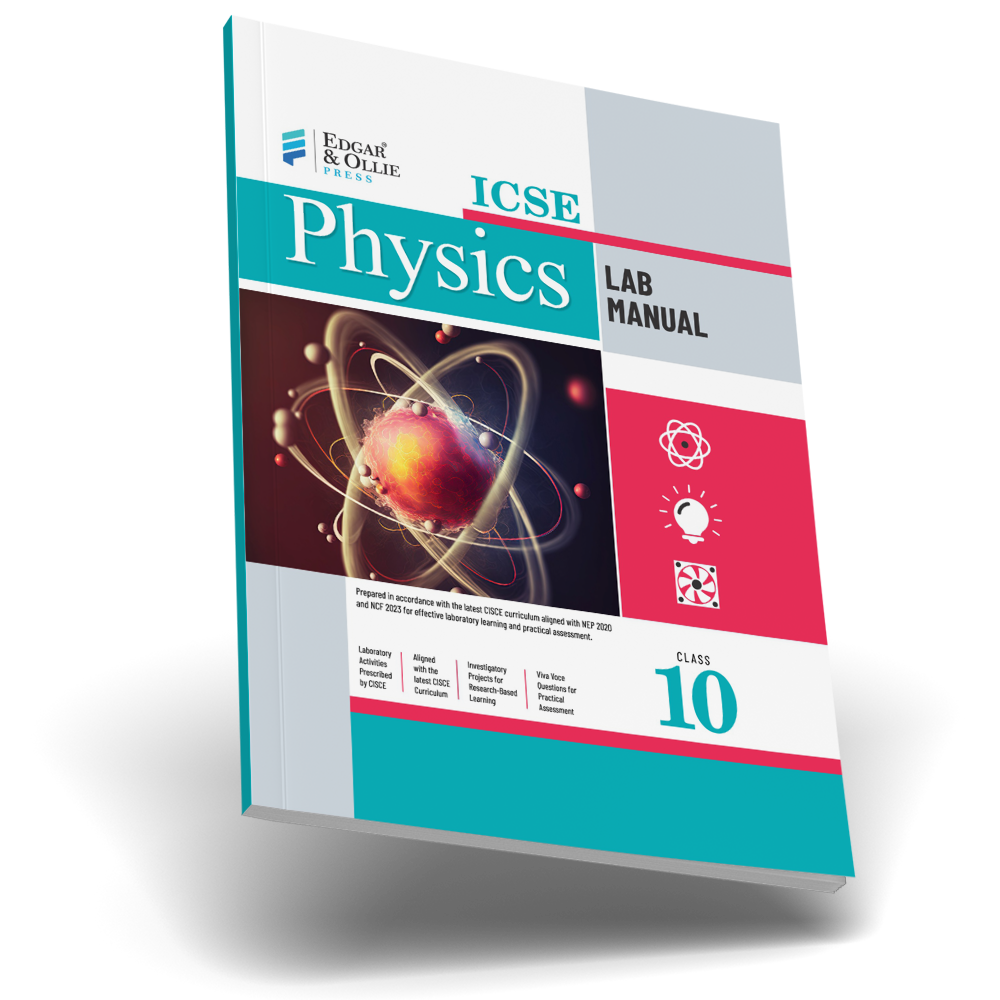
ICSE Physics
Lab Manual
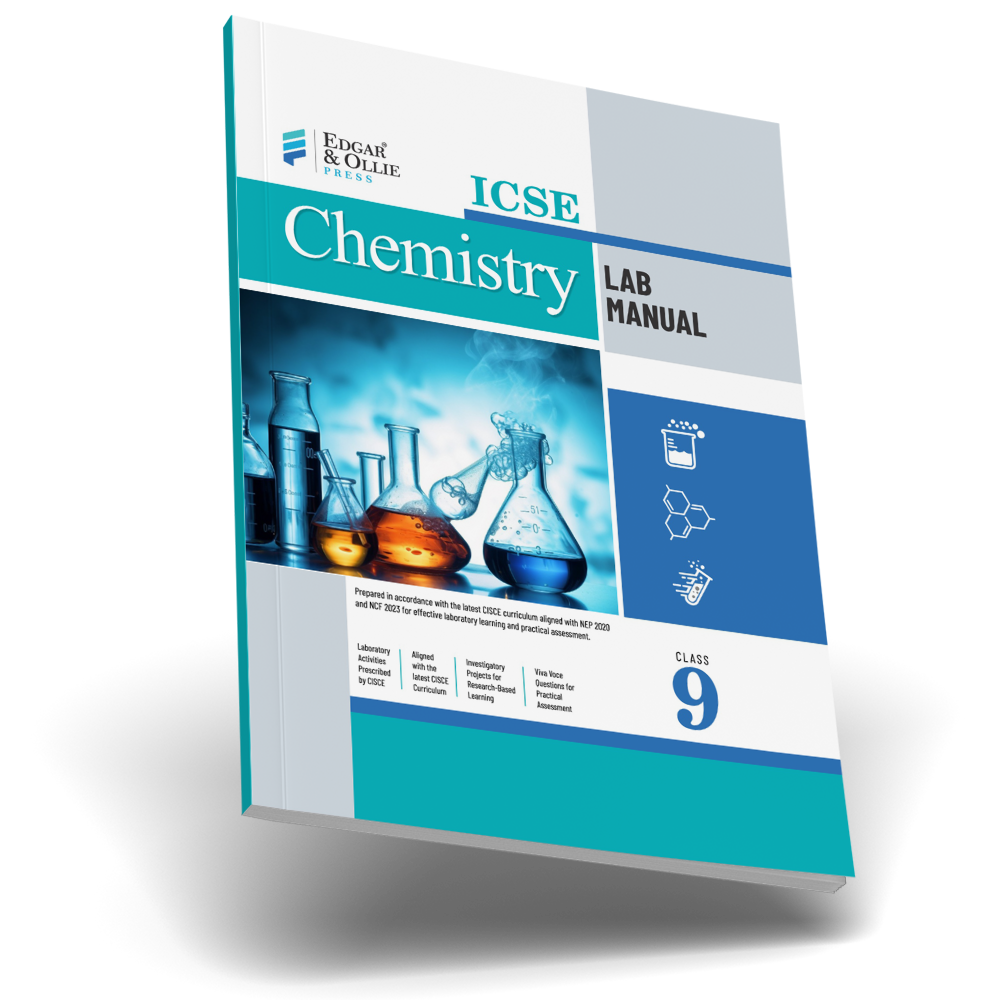
ICSE Chemistry
Lab Manual
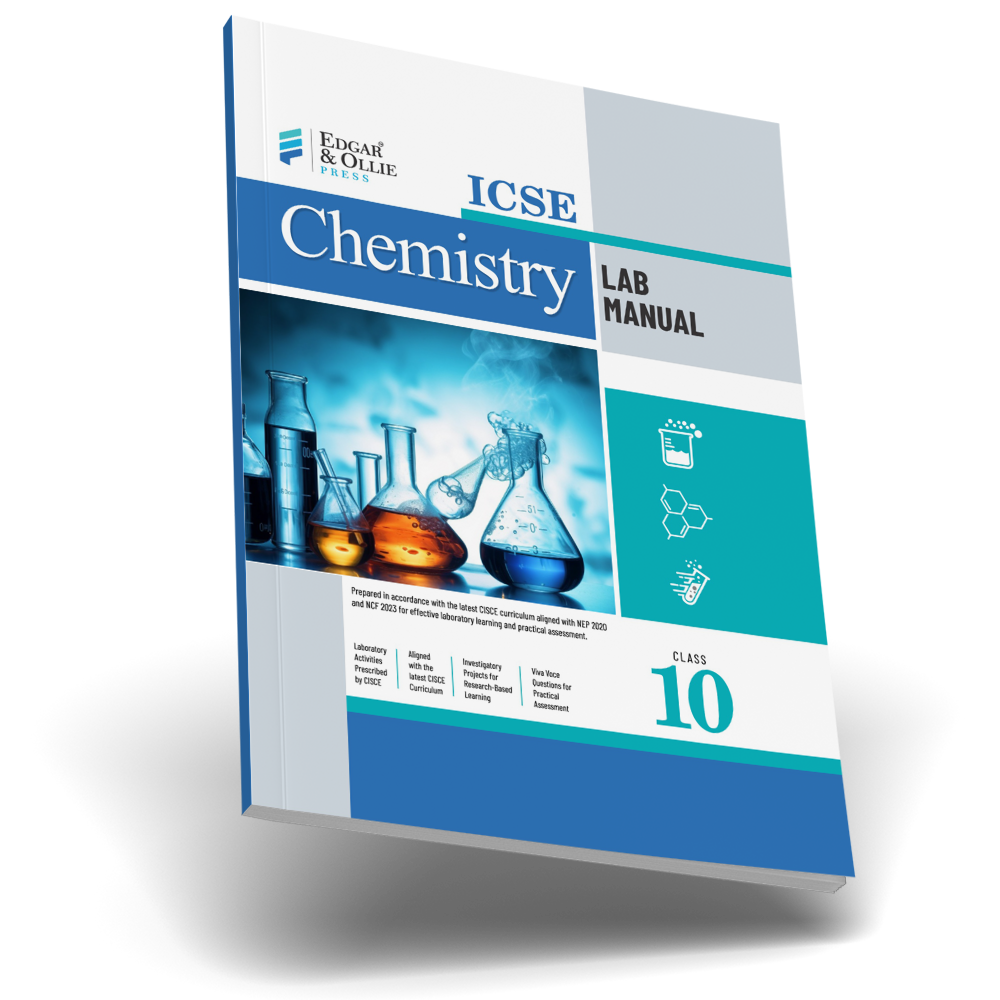
ICSE Chemistry
Lab Manual
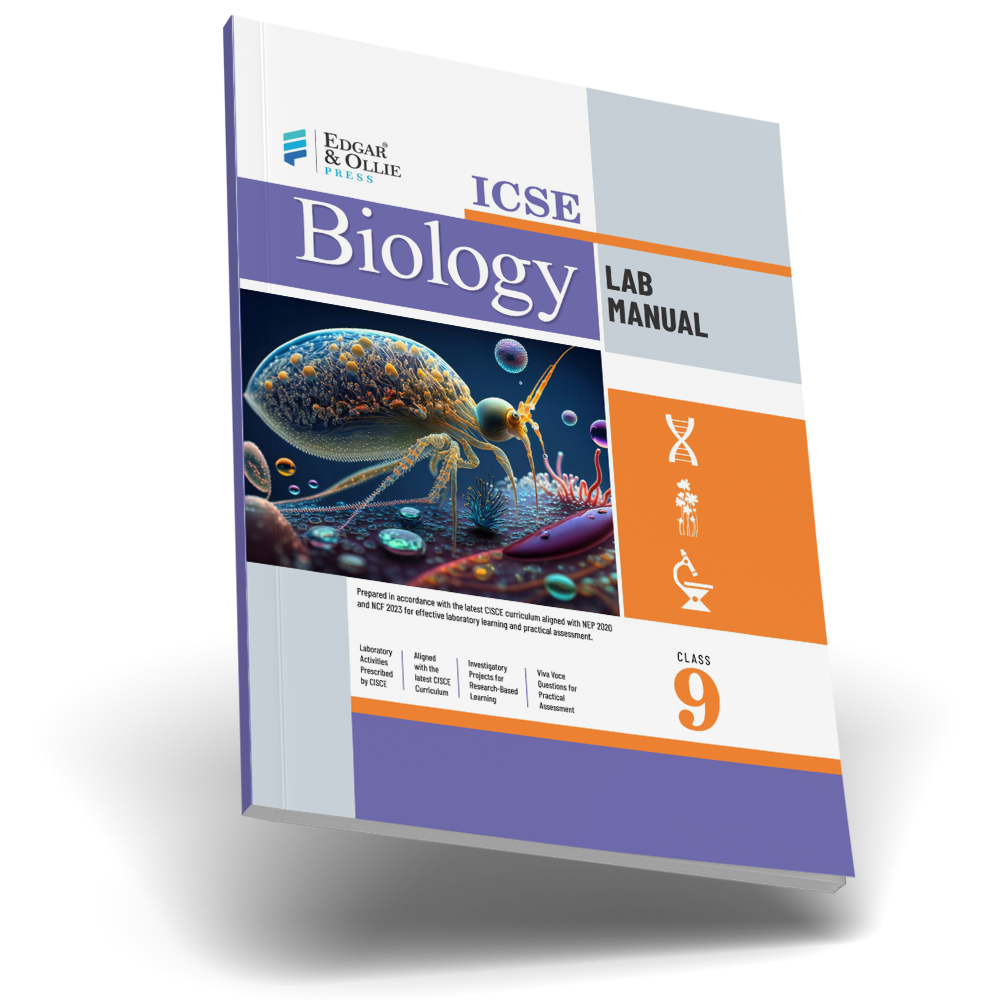
ICSE Biology
Lab Manual
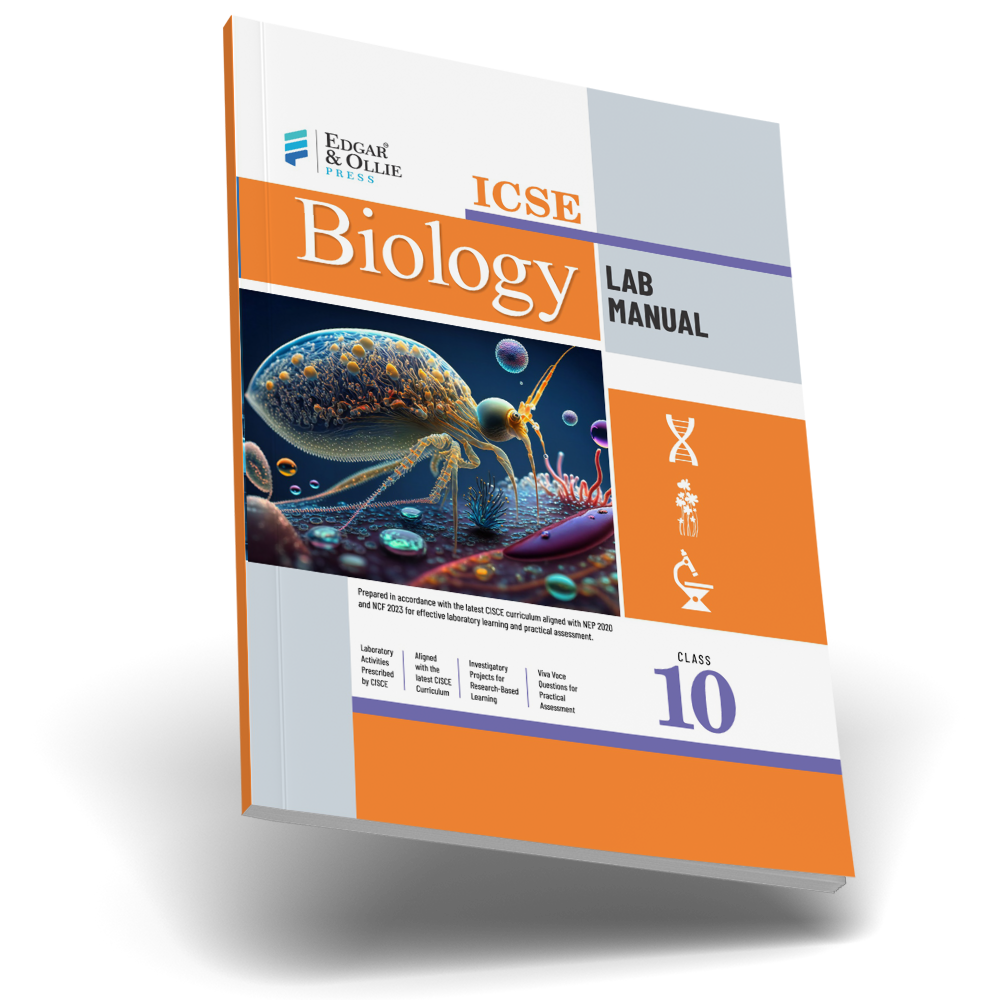
ICSE Biology
Lab Manual
Class 9
Class 10
ICSE Physics Lab Manual
Strengthens foundational physics concepts through precision measurements, graphical verification of laws, and structured inquiry into mechanics, heat, light, and electricity.
Key Practicals & Experiments:
- Measurements: Vernier Callipers, Screw Gauge & Spherometer least-count determination
- Mechanics: Simple Pendulum time period & (g) determination, Principle of Moments, Upthrust & Relative Density (Archimedes' principle)
- Light & Optics: Laws of reflection by plane mirrors, lateral displacement through glass block, refraction through glass prism
- Electricity: Verification of Ohm's Law, measurement of current, potential difference, and equivalent resistance (series & parallel)
- Heat & Calorimetry: Heat capacity and specific heat capacity using the Method of Mixtures
Aim • Apparatus • Ray/Circuit Diagrams • Systematic Steps • Observation Tables • Precautions • Viva Voce
Class 9
Class 10
ICSE Chemistry Lab Manual
Guides students through chemical reactions, identification of gases, qualitative salt analysis, and laboratory safety protocols with structured observation logs.
Key Practicals & Experiments:
- Thermal Decomposition: Action of heat on hydrated crystals, nitrates, carbonates, and metal oxides
- Gas Identification: Systematic detection of H₂, O₂, CO₂, Cl₂, HCl, SO₂, H₂S, NO₂, and NH₃
- Reagent Testing: Action of dilute acids and alkalis (Ammonium Hydroxide & Sodium Hydroxide) on metallic salts
- pH & Indicators: Acid-base testing with litmus, methyl orange, phenolphthalein, and universal indicator
- Flame Tests: Identification of metal cations (Sodium, Potassium, Calcium) with distinctive flame colours
Aim • Balanced Chemical Equations • Reagents • Step-by-Step Method • Color & Odour Tables • Inferences • Precautions
Class 9
Class 10
ICSE Biology Lab Manual
Unveils cellular biology, plant physiology, specimen identification, and human anatomical systems through microscopic studies and hands-on physiological experiments.
Key Practicals & Experiments:
- Microscopy: Microscope handling, preparation of temporary stained mounts (onion peel & human cheek cells)
- Plant Physiology: Demonstrating Osmosis (potato osmometer), Plasmolysis, and Transpiration rate (Ganong's potometer)
- Photosynthesis: Starch test in leaves, necessity of sunlight, chlorophyll, and carbon dioxide for photosynthesis
- Specimen Identification: Study of structural characteristics and adaptations in plant and animal specimens
- Plant & Animal Tissues: Microscopic identification of parenchyma, collenchyma, sclerenchyma, and muscle fibres
Objective • Biological Principles • Materials & Stains • High-Fidelity Line Drawings • Observations • Conclusions • Viva Voce
ISC Lab Manuals (Classes 11 & 12)
ISC Lab Manuals for Classes 11–12 comprise 6 books — 2 each for Physics, Chemistry, and Biology.
It encourages scientific inquiry through hands-on experiments, activities, specimen studies, and project work, helping students strengthen their understanding of concepts. The manual presents each experiment with clearly defined objectives, theoretical background, apparatus required, step-by-step procedures, observation tables, calculations, results, and precautions. Viva voce questions and Multiple Choice Questions (MCQs) further reinforce conceptual understanding and examination readiness. By integrating practical work with scientific reasoning and real-life applications, the manual develops observation, analytical thinking, accuracy, and problem-solving skills. It serves as an ideal resource for laboratory work, practical examinations, project assessments, and board examination preparation.
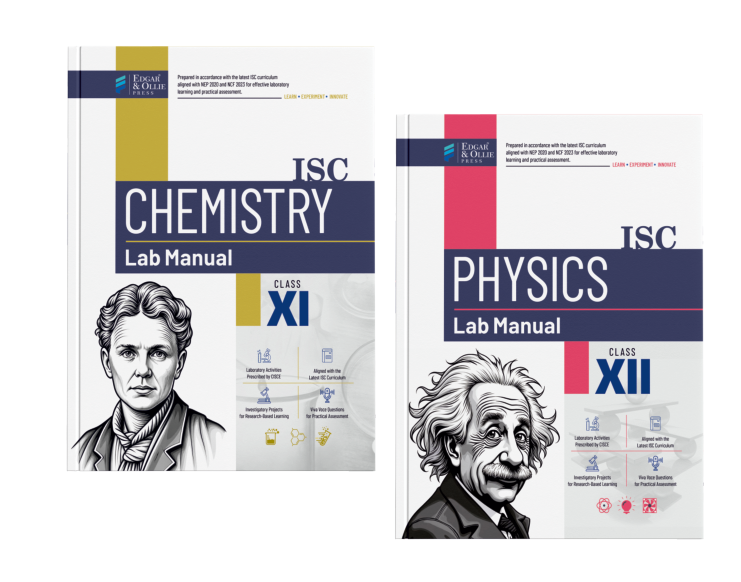
ISC Lab Manual Series • Chemistry, Physics & Biology (Classes 11–12)
ISC Laboratory Manuals (Classes 11 & 12)
Specialized laboratory manuals for Physics, Chemistry, and Biology authored strictly for the latest CISCE curriculum regulations.
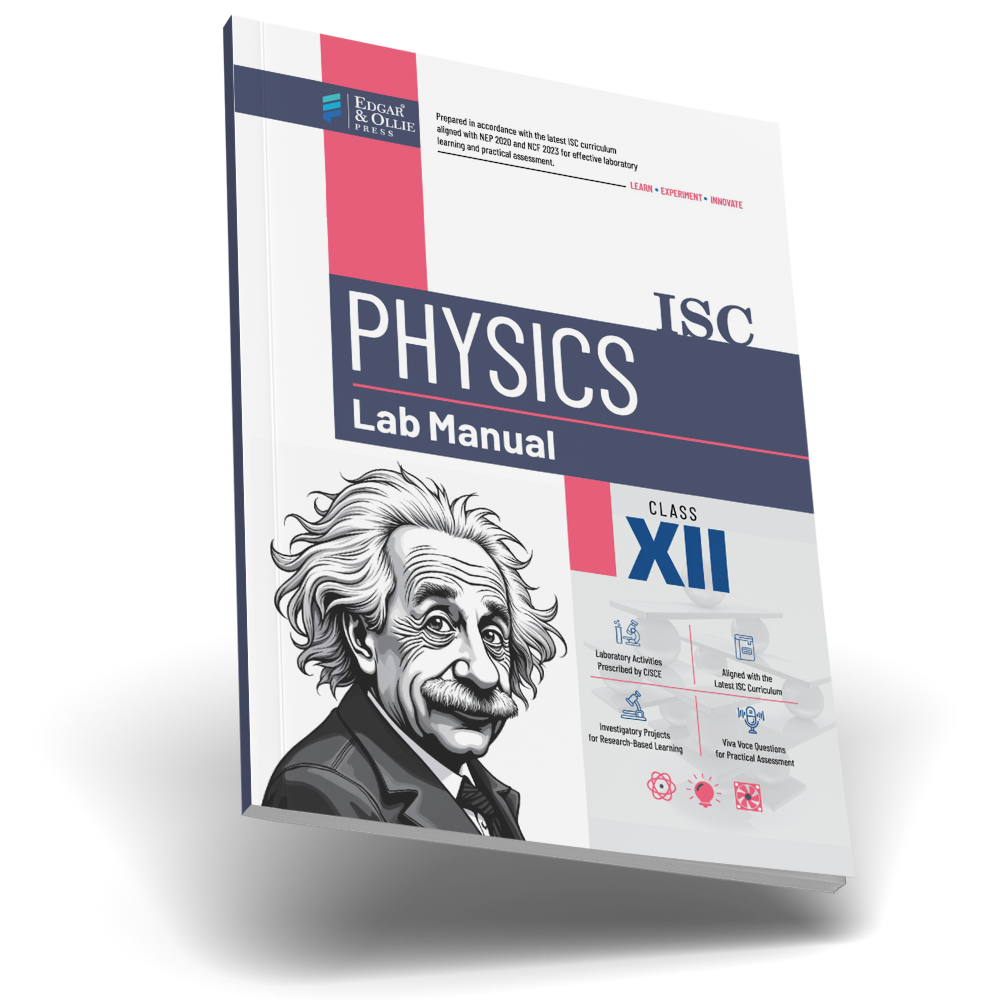
ISC Physics Lab Manual
Senior Secondary Practical Book
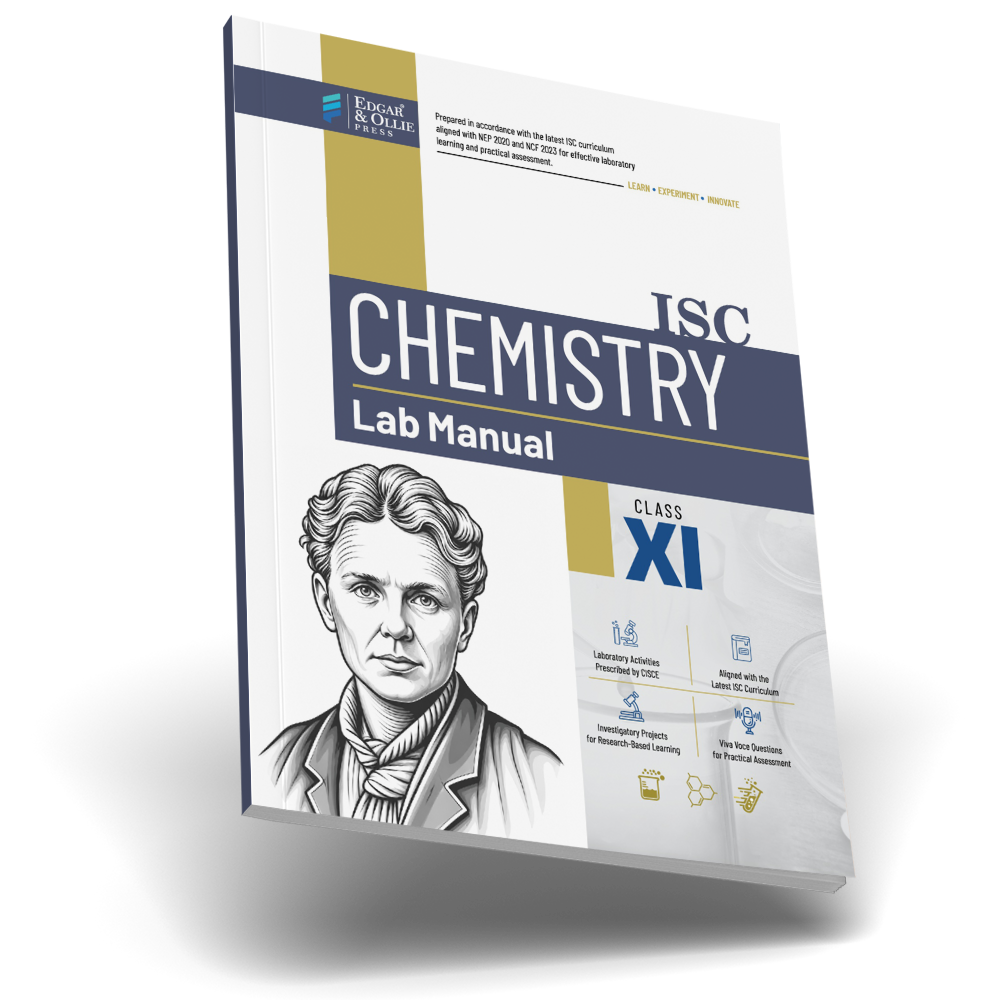
ISC Chemistry Lab Manual
Senior Secondary Practical Book
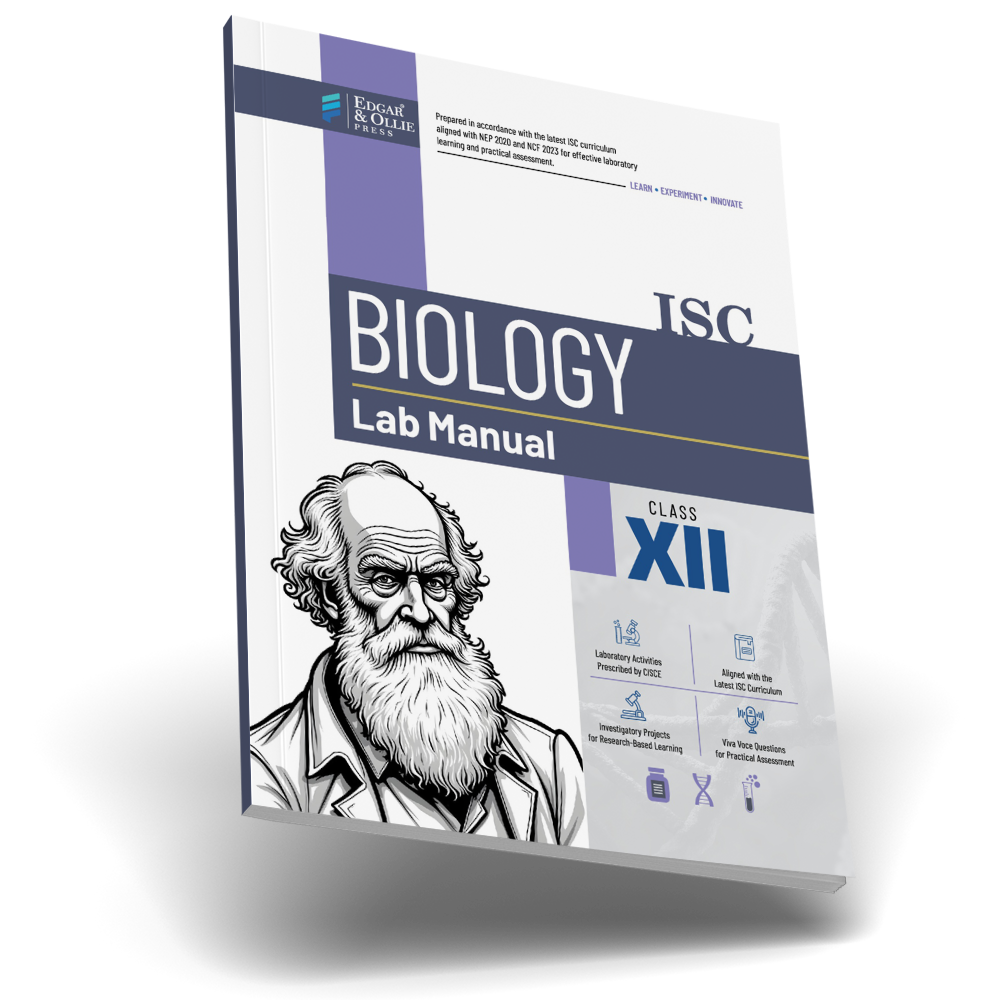
ISC Biology Lab Manual
Senior Secondary Practical Book
ISC Physics Lab Manual
Master advanced experimental physics with precision optical apparatus, electrical bridge networks, elastic properties, and semiconductor characteristics.
Key Practicals & Experiments:
- Elasticity & Fluids: Young's Modulus by Searle's method, Surface Tension by capillary rise, Viscosity by terminal velocity (Stokes' law)
- Sound & Vibrations: Speed of sound at 0°C using Resonance Tube, frequency of tuning fork with Sonometer
- Electricity: Resistance & specific resistance by Meter Bridge, EMF comparison and internal resistance of a primary cell by Potentiometer
- Optics: Focal length of convex lens & concave mirror by u-v method, angle of minimum deviation & refractive index using Spectrometer
- Modern Electronics: Forward and reverse bias characteristics of p-n junction diode and Zener diode voltage regulation
Error Analysis • Percentage Uncertainty • Linear Regression / Graph Plots • Viva Voce Bank • Topic-wise MCQs
ISC Chemistry Lab Manual
Comprehensive coverage of volumetric titrations, systematic semi-micro qualitative analysis, organic functional group identification, and organic/inorganic preparations.
Key Practicals & Experiments:
- Volumetric Titrations: Acid-base titrimetry (standard Na₂CO₃ vs HCl, oxalic acid vs NaOH); Redox titrations using standard KMnO₄ against Mohr's Salt and oxalic acid
- Inorganic Qualitative Analysis: Systematic detection of anions (CO₃²⁻, S²⁻, SO₃²⁻, NO₂⁻, Cl⁻, Br⁻, I⁻, NO₃⁻, SO₄²⁻, CH₃COO⁻) and cations across analytical groups I to VI
- Organic Analysis: Tests for functional groups — Alcohols, Phenols, Aldehydes, Ketones, Carboxylic acids, and Primary aromatic amines
- Preparations: Synthesis of Potash Alum, Ferrous Ammonium Sulphate, Acetanilide, and Iodoform
- Chemical Kinetics & Colloids: Effect of concentration on rate of reaction (Thiosulphate + HCl); Preparation of lyophilic and lyophobic sols
Stoichiometric Formulas • Group Separation Tables • Confirmatory Tests • Lab Safety Protocols • Board Viva Q&A
ISC Biology Lab Manual
Combines cytology, biochemical testing, plant and animal histology, ecological field surveys, and controlled physiological investigations.
Key Practicals & Experiments:
- Cytology & Mitosis: Acetocarmine squashes of onion root tips to observe and identify stages of Mitosis
- Biochemical Tests: Qualitative identification of carbohydrates (glucose, starch), proteins (Biuret, Xanthoproteic), and fats
- Physiology & Chromatography: Separation of chloroplast pigments by Paper Chromatography; Rate of transpiration and photosynthesis
- Histology & Anatomy: Transverse section (T.S.) studies of dicot and monocot roots, stems, leaves, and mammalian reproductive tissues
- Ecology & Spotting: Soil and water quality testing (pH, moisture, turbidity); Taxonomic spotting of representative plant and animal specimens with biological reasons
Scientific Drawing Guidelines • Controlled Experimental Controls • Project Work Ideas • Board Viva Voce & MCQs
The 8-Step Practical Framework
Every experiment across Physics, Chemistry, and Biology follows a uniform, structured format to guarantee pedagogical clarity, repeatability, and laboratory accuracy.
Clear Objectives (Aim)
Explicit statement of the hypothesis or measurement goal to focus student inquiry.
Theoretical Background
Fundamental scientific principles, mathematical derivations, and balanced chemical equations.
Materials & Apparatus
Exhaustive inventory of laboratory glassware, instruments, chemicals, and specimens.
Step-by-Step Procedure
Logical, numbered instructions accompanied by ray diagrams, circuit schemes, and apparatus setups.
Observation Tables
Pre-formatted structured tables with explicit units, least count recordings, and trial logs.
Calculations & Errors
Formulas, graphical plotting guidelines, slope determination, and percentage error estimation.
Results & Precautions
Final conclusion in standard scientific units and critical safety precautions to minimize error.
Viva Voce & MCQs
Exhaustive question banks with conceptual answers, reasoning questions, and board exam MCQs.
Key Features of Edgar & Ollie Lab Manuals
Highlights from Pages 16 & 17 of the official publisher catalogue.
ICSE & ISC Syllabus Aligned
Meticulously designed in strict compliance with the latest CISCE curriculum regulations, assessment weightages, and practical examination formats for Grades 9–12.
Hands-on Practical Learning
Encourages active learning through experiments, activities, specimen studies, and project work, enabling students to bridge theory with direct laboratory experience.
Systematic Practical Format
Presents each experiment with clearly defined objectives, theoretical background, apparatus required, systematic procedures, observation tables, and precautions.
Real-Life Applications
Connects laboratory findings with everyday phenomena, industrial processes, and technological advancements, helping students understand the practical relevance of science.
Scientific Skills Development
Develops sharp observation, critical analytical thinking, measurement accuracy, graphical deduction, error awareness, and methodical problem-solving skills.
Project Work & Viva Support
Comprehensive guidelines for investigative projects, practical exam rubrics, multiple-choice questions (MCQs), and in-depth viva voce questions with model answers.
Distinguished Author Team
Experienced educators, researchers, and curriculum specialists behind the series.
Akashdeep Yadav
Author — Physics Lab Manuals
Senior secondary physics educator with expertise in precision experimental instrumentation and CISCE practical assessment.
Dr. Vandana Huria
Author — Chemistry Lab Manuals
Chemistry academician and specialist in microscale laboratory techniques, qualitative analysis, and board curriculum design.
Priya Antil
Author — Biology Lab Manuals
Biology educator and author focusing on experiential cytological investigations, ecological field methods, and physiological experiments.
Request Evaluation Copies for Your School
Equip your physics, chemistry, and biology laboratories with the most rigorous, curriculum-aligned lab manuals. Contact our academic relations team to receive evaluation specimens.